Showing posts with label Research. Show all posts
Showing posts with label Research. Show all posts
Sunday, 8 May 2011
Unit 6 - Audiences 2
The audiences my animation will be looking at will be students at secondary schools for education purposes on how the body fights infections.

Thursday, 14 April 2011
Time Machine - Essay Introduction
The essay will analyse critically on how computer arts started and what it is like today. The enquiry will be focused on looking as far back as possible to where computer arts have started before going up to where it is now. The resources for this essay are Digital Encounters, a Computer in the Art Room: the origins of British computer arts 1950-80, Digital Art for the 21st Century Renderosity, MediaArtHistories, and Video Game Art. Additional resource that will be included in the essay is on A Brief History of Computer Art which will help show the development of Computer Arts from the 1950’s to what it’s up to today.
Unit 6 - Audiences 1
The audience that I am going to focus on for the 3D animation is Teenagers and Adults. The reason why I chosed this as I have decided to make this animation as a documentry, giving out useful information about the antibodies and why they are used to help fight infections in the body.
Wednesday, 13 April 2011
Unit 6 - Research 2
The Immune System
Part 1: http://www.youtube.com/watch?v=14koX2tbRzU
Part 2: http://www.youtube.com/watch?v=VOD5tuQ5wvo
Part 3: http://www.youtube.com/watch?v=zWG0eUaU-XY
Tuesday, 12 April 2011
Unit 6 - Subject Choice
The choice I was thinking of doing is the making of an antibody, however, I also like to do the fighting of an infection. Would I be allowed to combine these two subjects into one? I mean, the making of an antibody is quite simple to do as antibodies are created to be use in helping out on fighting infections.
Unit 6 - Research 1

(Human Body Deceases. (2011). [Red Blood Cells and a White Blood Cell]. http://www.humanbodydeceases.com/userimages/white-blood-cell-amungst-red.jpg (Accessed on 12th April 2011)
Red Blood Cells perform the most important duty in the human body. They carry oxygen from the lungs to all parts of the body and remove waste that the body doesn't need (Carbon Dioxide) to the lungs which we breath out. Without the Red Blood Cells, our body will slowly die. Over time, the Red Blood Cells get worned out and eventually die off but the bones in our body continue to produce more blood. The average life cycle it has is 120 days.
As our bodies continue to produce more blood, it is safe for a adult to donate blood to help those who are in need of it or for emergencies. Once donated, the donator will feel light headed due to the loss of oxygen-rich red blood cells and blood sugar. This is not a worry as the body will quickly stabilize itself.

(The Franklin Institute. (1996). [White Blood Cells]. http://www.fi.edu/learn/heart/blood/images/large_white-cells.jpg (Accessed on 12th April 2011)
White Blood Cells are provided to fight off infections like viruses, bateria and fungi. They are always on the lookout for diseases and when a germ appears, they can attack in two ways.
1. Produce protective antibodies that will overpower the germ.
2. Surround the germ to devour it.
The white blood cells have a short life span, living up to a few days or a few weeks. A drop of blood can contain anywhere from 7,000 to 25,000 of white blood cells at the time. If the drop contains 50,000 white blood cells, the person will have the symptom Leukemia which is a cancer in the blood.

(Pharmatching.com. (2009). [Antibodies]. https://www.pharmatching.com/blog/wp-content/uploads/2011/01/monoclonal_antibody.jpg (Accessed on 12th April 2011)
Antibodies are produced by the white blood cells to help weaken and overpower infections that are a threat to the immune system. Antibodies are produced in the blood stream to find an infection that's in the body or search to make sure there is no infections around. The life span of the antibodies is a few weeks.
Thursday, 24 March 2011
Unit 5 - Timeline - Ladislaw Starewicz (1882 - 1965)

Ladislaw Starewicz started animating in 1910 and continued until his death in 1965. He was born in Russia but moved to France over the 50 year period. Starewicz maintained a fasination with the strange, almost surreal properties, and exploring the realistic motion and movement in animations. His animation films he creates are mostly joyful but cruel with movement of the characters that are very close to annihilation.

The Mascot, also known as The Devil's Ball or Puppy Love, was created using toys and demonic vegetables. The film was aiming for children in the 1900's but if shown today, it would be thought of as strange and the situation the characters are in. This animated film betrays Starewicz inspiration from his longer work by using live-action techniques using a projection and the attention to details.
This animation I found adorable when the film focuses mostly on the dog character who is trying to get an orange for his owner. The situation starts to happen when the dog wants to go back home with the orange to give to his owner but is trying to get stopped by the other toys and the demonic vegetables. The characters are quite realistic when brought to life by the use of stop-motion animation but can be quite creepy which is why it's not recommended to kids now.
Danks, Adrian. (2004). http://www.sensesofcinema.com/2004/cteq/starewicz_mascot/ (Accessed on 29th March 2011)
Animation World Netwrok. (1999). http://www.awn.com/heaven_and_hell/STARE/stare1.htm (Accessed on 29th March 2011)
Wikipedia. (1910). https://blogger.googleusercontent.com/img/b/R29vZ2xl/AVvXsEiOjgx4SXVOvKBd5dKpE9ymZAWo-Cphsf-C2zkxEw8jxI7cNhwhurJJlfNJVwjgrKdpwqDvO1zn6rlpgVogwKj2EcAWVCSoe604-tBBOJ9huwTP44JkcljkDQdlEgd8PRiiURNS8j_OxO_4/s1600/Picture+25.png (Accessed on 29th March 2011)
Animation World Netwrok. (1999). http://www.awn.com/heaven_and_hell/STARE/stare1.htm (Accessed on 29th March 2011)
Unit 5 - Timeline - Lotte Reiniger (1899 - 1981)

Lotte Reiniger was born in Berlin 1899 to cultured parents. At a young age, she spent most of her time, creating silhouettes for her home-made shadow theatre. She self-taught herself on creating silhouettes by taking the ancient art of shadow plays. The start of silhouette animations started and ended with her and did not carried out any further than that. There is no trace of the original she had when she created her animations so all that is left is copies ones after another, lacking small details in the work.
She created an animation called Cinderella which was released in 1922. This animation shows that she was longing to create animations back in her earlier age which was the reason she started to be a silhouette animator.


The same animation came out in 1954 with voice acting which now telles its audience what they are saying. The animation in the 1922 didn't had that but, you can see the characters mouths moving seeing that they are talking. However, putting voices into animations weren't developed yet.
The animation reminds me when my class did a shadow play which we have to present to the whole school. The play only had a voice over on what is going on but no lip scyning was involved, neither was body movement in the puppets. This animation was the only one that brought back the ancient art of silhouettes before dying off again as it was not very popular. In my view, the use of silhouettes will properly be brought up from the dead and maybe get popular like a art genre.
MUBI. 2008: http://mubi.com/films/38439 (Accessed on 28th March 2011)
Worth, Stephen. 2011: http://www.animationarchive.org/pics/achmedreiniger.jpg (Accessed on 28th March 2011)
North, Dan. 2009: http://drnorth.files.wordpress.com/2009/10/vlcsnap-2009-10-15-20h56m23s72.png (Accessed on 28th March 2011)
Flickr. 2011: http://farm4.static.flickr.com/3478/4014594287_e09c7144e1.jpg (Accessed on 28th March 2011)
Unit 5 - Timeline - Walt Disney's Fantasia (1940 - 2000)

Fantasia (1940) was produced by Walt Disney, the founder of Disney productions. He was also the creator of Mickey Mouse who soon came to be the productions mascot. Being successful over the years, Disney finally opened a theme park in Califronia in 1955 for kids and adults to go on rides, explore and meet familar characters such as Goofy, Donald Duck, Pluto, Snow White and so on. Disney also voiced as Mickey for The Sorcerer's Apprentice animated by Jim Salvati. Disney died from Lung Cancer in 1966 but, Disney continued creating fantastic animations.
Nutcracker Suite, an animation shown in Fantasia in the 1940. The animation was made by Pyotr Ilyich Tchaikovsky who created this wonderful piece by using nature itself. The use of the music for each animation under the name gives the animation on what they are representing. The music used in the films were recognized easy but viewers who have properly heard it on radio, adverts or in other animated films.


Fantasia 2000 was released in the 1999 with newly made animations, but one of the old animations was kept which was The Sorcerer's Apprentice. An animation short called The Pines of Rome was fantastically made and looked more 3D than being 2D. This goes beyond logic, giving its magic to what all Disney animations should have. It's what makes it fantastic and amazing. This animation was directed by Hendel Butoy.
Another animation called Firebird was brilliant. It shows the start of spring before getting wiped out by a lava flow. However, when spring is destroyed, it still flourished before the animation finishes. This shows that nature is good but the lava is not and is considered as the bad guy. How the animation got it's name because of the character design for the bad guy (lava). This animation was directed by Gaetan Brizzi and Paul Brizzi. This animation changed how Disney draw their human characters.


Fantasia 1940 would always be the best for me as it's the original, the music suited well with the animations and that it contains the magic what Disney had at the time. Fantasia 2000 tried to have the same magic which it had in 1940 but not very well. But, the two animations "Firebird" and "The Pines of Rome" were brilliantly made and created a wonderful atmosphere. The magic in these animations may be different to the ones in the 1940 but, it makes you feel alive watching it.
Encyclopedia of World Biography. 2011: http://www.notablebiographies.com/images/uewb_04_img0239.jpg (Accessed on 28th March 2011)
Snarkerati. 2007: http://snarkerati.com/movie-news/files/2009/03/sorcerers-apprentice.jpg (Accessed on 28th March 2011)
News from the Boston Becks. 2010: http://nighthawknews.files.wordpress.com/2010/07/disney-fantasia_1.jpg (Accessed on 28th March 2011)
Animation Artist. 2010: http://www.animationartist.com/movies/fantasia2000/Gallery/img0011.jpg (Accessed on 28th March 2011)
Cinematic Intelligence Agency. 2011: http://thecia.com.au/reviews/f/images/fantasia-2000-0.jpg (Accessed on 28th March 2011)
Unit 5 - Timeline - Norman McLaren (1914 - 1987)
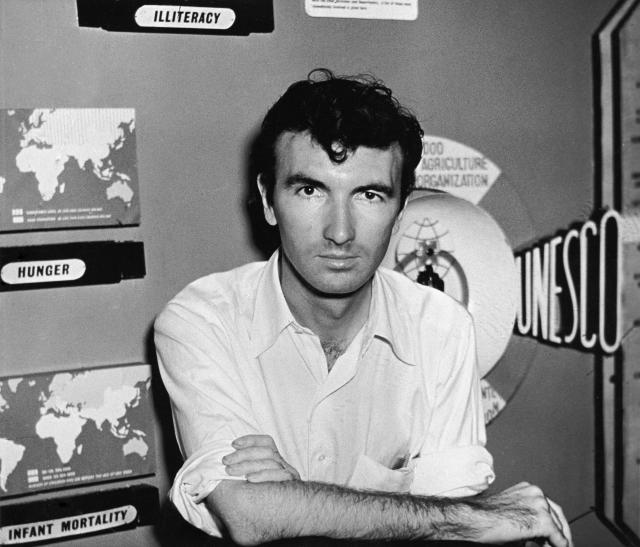
Norman McLaren was born in Scotland in 1914. At the age of 18, he entered the Glasgow School of Fine Arts to study interior design. However, he didn't earn the diploma as he began to have an interest in filmmaking which then became an acquainted with the great Russian filmmakers Eisenstein and Pudovkin and the German animator Oskar Fischinger. After seeing Oskar's abstract animated film, he was influenced.

Begone Dull Care was made in 1949. The animation is abstract and watching through it, you can see some human faces, etc if you look carefully. It may take a couple of watches to spot some or maybe if you already spotted them on your first try. The technique he used created a freedom feeling in this animation. The film and the music along with it reveals their essences, rich textures, patterns and energy.

Le Merle was made in 1958 which I found very amusing as it was animated by just using lines and dots to create the black bird. The song used in this film was quite catchy and suited very well with the animation. The animation was made to be surrealism as the black bird loses it's parts then gets them again. Also, it changes its form as well but gets its actual form at the end.

This animation uses horizontal lines that split when they are coming at each other at the centre at the same time. The lines will continue to split into many other lines until going back to normal by doing the same thing. The animation itself was made in 1962. while looking at this carefully, I noticed the lines bounce off each other one they touch, unable to go to the other side of the frame but when more lines appear, it gets more harder to notice it at all.

This image shown here is a good example on what the animation is like. The film was made in 1967 to show a frame by frame on animating to create a movement. I found this film to be very good and would suggest this to those who want to learn how to animate. It doesn't show you the frame by frame effect until later on in the film.
Taylor Albert. (1950). Norman McLaren. http://www3.nfb.ca/objan/lrg/Personnes/M/McLaren_Norman_60.jpg (Accessed on 24th March 2011)
Ortega Marcos. (1949). Begone Dull Careb Still. http://expcinema.com/images/albums/stories/mclaren/normal_vlcsnap-193094.jpg (Accessed on 24th March 2011)
Chelsea Space. (1958). Le Merle Still. http://www.chelseaspace.org/images/azumi/azumi_s_03.jpg (Accessed on 24th March 2011)
Daylife. (1962). Lines Horizontal Still. http://thumbnails.truveo.com/0018/A5/E7/A5E7E89249F22E11D4E6F2_Large.jpg (Accessed on 24th March 2011)
The Movie Doc. (1967). Pas de Deux Animated Loop. http://28.media.tumblr.com/tumblr_l9nol1F28R1qa4pypo1_500.gif (Accessed on 24th March 2011)
The Movie Doc. (1967). Norman McLaren. http://www3.nfb.ca/animation/objanim/en/filmmakers/Norman-McLaren/overview.php (Accessed on 24th March 2011)
Wednesday, 23 March 2011
Unit 5 - Timeline - Winsor McCay (1871 - 1934)

Born in Michigan, USA, 1871. His name used to be Zenas Winsor McKay before he dropped Zenas for Winsor. He started drawing at an early age and never stopped. The details he puts in his work is amazing. At the age of 13, he drawn a shipwreck on the school blackboard which then was photographed which many copies have been sold.

In 1912, he made an animated film called How a Mosquito Operates. The film is also known to be called as Life of a Mosquito, The Story of a Mosquito or The Hungry Mosquito. The film shows a Mosquito looking for food before spotting a man that walks pass it and decided to follow him. Following to the man's bedroom, the Mosquito had a chance to drink the man's blood once he falls asleep. Getting that chance, the Mosquito starts drinking his blood. However, being too greedy, the Mosquito drank too much blood which ended up as a disaster.
I missed watching this animation as I was seeing Gaby at the time. However, I did watch it on youtube. When watching this, I felt uneased on how the man managed to go back to sleep without having to get up and check if there is any mosquitos around. I wouldn't like to wake up having mosquito bites on my face. That is why I use lemon spray so that they won't go near me.

In 1914, he created a film called Gertie the Dinosaur which he made to be interactive. By doing so, he says things for Gertie to do and she does it. I found this animation to be humorous when she eat things that is way beyond logic and that she throws Jumbo the Mammoth into the lake. This film was when things started to become serious for his work by the mass of details put into it. Also, I didn't know that there was an animation that was used to be an interactive. Sadly, the animation is only interactive to the animator itself as Winsor knows what to do and say to Gertie.

The Sinking of the Lusitania was a another animated film he made to show an actual event which happened in 1915. The animation was made 3 years after the event. 25 thousand photographs were taken to create this animation. The animation shows the sinking of the Lustitania which sanked when nearing the coast of Ireland before getting hit by a torpedo from a German U-Boat. Two years after the disaster, USA declared war on Germany which lead in World War 1. I didn't know what to feel when watching this but I knew that Germany were a nasty lot at the time, causing the war the first place then being defeated at the end.
Winsor's work inspired large successors like Walt Disney and Max Fleischer which helped develope the world of animations to what it is now. This made him to be the first animator to earn his place down in film history. In 1934, he died at the age of 64 in Brooklyn, New York, USA.
IMDb. (1990). Winsor McCay. http://www.imdb.com/name/nm0565560/ (Accessed on 24th March 2011)
Ranju. (2008) Winsor McCay. https://blogger.googleusercontent.com/img/b/R29vZ2xl/AVvXsEjfqYBJBSIEgIobAqIhHoXq0opwUYRNJPNFBROblH8GW_rOqVAbnfCn3nv-N-s_np4AjDjKo8FKMlojbtUyWq-LJiJ1-EjH0DhtGP-6cx_TXeZyG0cmgRM9YDEEIyLrSg0Dv-iZj7dp12DO/s320/Winsor_McCay.jpg (Accessed on 24th March 2011)
World News. (2011). How a Mosquito Operates Still). http://i.ytimg.com/vi/zr58Gka6KTI/0.jpg (Accessed on 24th March 2011)
Animation Art. (2011). Gertie the Dinosaur Still. http://www.galerielaqua.de/galerielaqua/IMAGES/Original/animation%20art/036.gif (Accessed on 24th March 2011)
Big Cartoon DataBase. (1998). Sinking of the Lustitania Still. http://images.bcdb.com/ad_im/other/lust_6.jpg?u= (Accessed on 24th March 2011)
Monday, 21 March 2011
Thursday, 10 March 2011
Unit 5 - The Meaning, Definition and Synonyms of Furtive
Meaning: Attempting to avoid notice or attention, typically because of guilt or a belief that discovery would lead to trouble; secretive.
Definition: Sneaky, secretive.
Synonyms: Artful, calculating, cautious, circumspect, clandestine, cloaked, conspiratorial, covert, crafty, creepy, cunning, disguised, elusive, evasive, foxy, guileful, hidden, hush-hush, insidious, masked, scheming, shifty, skulking, slinking, sly, stealthy, sub-rosa, surreptitious, tricky, under wraps, under-the-table, undercover, underhand, underhanded, wily.
Unit 5 - Great Spotted Woodpecker Influence Map

A british woodpecker have strong beaks to peck through wood like trees to build their nests. I thought this bird will be a good example to use for my story.
Unit 5 - Story Development 1
First off, I started to think of a story when the furtive blimp is trying to hide away from getting bombed by German planes. The reason for this is that blimps were used in the 2nd world war to protect important buildings like schools from low leveled bombings.

The City of London Bowling Club. (1939-1945). http://www.cityoflondonbc.co.uk/html/club_pictures_14.html (Accessed on 10th March 2011)
These type of blimps are known as barrage balloon. This photo was taken at the London Bowling Club between 1939 to 1945.
My idea started to change as the thought of a blimp balloon got me an idea that it would easily burst if something sharp would to puncher it. How I am going to bring that to my story was simple. A bird.


biofoundation.net. (2008). http://www.theanimalfiles.com/images/bird_beaks_mdm.jpg (Accessed on 10th 2011)
Heart of England Raptors. (2011). http://www.hoeraptors.com/userimages/talons.jpg (Accessed on 10th 2011)
Birds are known to have sharp talons to penetrate their prey or to get a good grip on something like a tree branch. A bird's beak comes in many different shapes and sizes depending on the bird and the type of food they eat.
My other idea of a story which I am quite proud of is when the balloon blimp is floating happily before seeing a flock of birds heading his way. He tries to hide in various of places until he found the perfect hiding point to get out of trouble. After the bird flock left, he comes out of hiding in relief before bursting when a bird, who is left behind from the flock, penetrates through the blimp. The blimp crashes down who soons starts to sob.
The City of London Bowling Club. (1939-1945). http://www.cityoflondonbc.co.uk/html/club_pictures_14.html (Accessed on 10th March 2011)
These type of blimps are known as barrage balloon. This photo was taken at the London Bowling Club between 1939 to 1945.
My idea started to change as the thought of a blimp balloon got me an idea that it would easily burst if something sharp would to puncher it. How I am going to bring that to my story was simple. A bird.
biofoundation.net. (2008). http://www.theanimalfiles.com/images/bird_beaks_mdm.jpg (Accessed on 10th 2011)
Heart of England Raptors. (2011). http://www.hoeraptors.com/userimages/talons.jpg (Accessed on 10th 2011)
Birds are known to have sharp talons to penetrate their prey or to get a good grip on something like a tree branch. A bird's beak comes in many different shapes and sizes depending on the bird and the type of food they eat.
My other idea of a story which I am quite proud of is when the balloon blimp is floating happily before seeing a flock of birds heading his way. He tries to hide in various of places until he found the perfect hiding point to get out of trouble. After the bird flock left, he comes out of hiding in relief before bursting when a bird, who is left behind from the flock, penetrates through the blimp. The blimp crashes down who soons starts to sob.
Tuesday, 8 March 2011
Unit 5 - Timeline - Eadweard Muybridge (1872)

The use of high speed photography was pioneered by Muybridge to prove that a galloping horse uses all four of it's hooves during running. In 1878, he took many stills of a horse by the name of Sallie Gardner as it gallops by. He successfully proved it to Leyland Stanford that a horse does bring all four of it's hooves on the ground while running.
Thursday, 16 December 2010
Unit 3 - Twisted Corridor Image - Suggestions Please

A twisted corridor from a game called the Legend of Zelda: Ocarina of Time.
Would this be a good idea for me to use for my Environment project? But, it will be a room, not a corridor.
Monday, 6 December 2010
Unit 3 - Ideas For Environment
The ideas I thought I could do as my final piece would be:
1. A Spooky Graveyard

2. A Poker Table with an eerie atmosphere.

3. A Empty Street/Ally Way.


1. A Spooky Graveyard
2. A Poker Table with an eerie atmosphere.
3. A Empty Street/Ally Way.
Tuesday, 9 November 2010
Unit 2 - Research on the First Men in the Moon
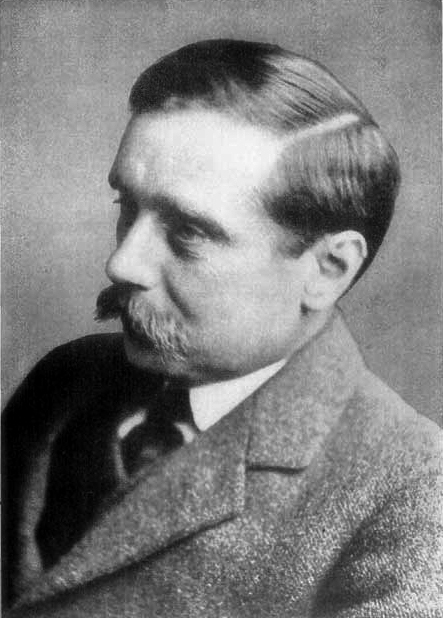
The book was written by Herbert George Wells in 1901. Sixty years before Neil Armstrong took his first step on the moon. So basically Herbert had no idea what the moon was like close up.
He was born in September 21st 1866 in Bromley, Kent, England. He began his literary career in 1895 because of his first novel called "The Time Machine". During London's Normal School of Science, he written "The First Men in the Moon" as well as many others. The book is about a story of mankind on a journey to make contact with life outside the planet Earth. Mankind are still trying to find life outside Earth now in the present. But thinking what the creatures would look like outside of Earth is that they combine them with existing animals on planet Earth. Like metamorphosis.

One of the creatures shown in a documentry called Hawking's Universe. This creature seems to be a mixture of a Scorpion and a Hammer Head Shark.

This creature seems to be a mixture of a Turtle and a Dung Beetle.
We don't know what aliens would actually look like so we artists just guess by combinding various of existing animals that we know into one. The background area of the two pictures seem to be like a desert with not much vegetation.
For the aliens mentioned in the book, they seem to be like humans with the machines they have and that they have hatchets to use to cut meat or if they are in danger. By the sound of it, the Selenites seem to be intelligent as well as meat eaters.
"Insects," murmured Cavor, "insects! And they think I'm going to crawl about on my stomach - on my vertebrated stomach!"
Also, what is mentioned in the book that the Selenites are like insects but Cavor doesn't mention on what insect they seem to relate too down on Earth. That is why we artists have to imagine what they look like, it could either be a human centipede, a cockroach, a moth and so on.
The environment outside the moon is suppose to be like a desert with some vegetation around with a tinge of amber. Along with that the shadows from the rocks/craters were purple, the fog is at a far distance of the sun, and the sky was blue and clear like it was down on Earth.
"The glare of the sun had taken upon itself a faint tinge of amber; the shadows upon the cliff of the crater wall were deeply purple. To the eastward a dark bank of fog still crouched and sheltered from the sunrise, but to the westward the sky was blue and clear."
The vegetation on the moon gave me a brief idea on what the plants would have looked like. The part when it explains about the plants act like a thermometer when the mercury reaches the top that looks like bubble that's gonna explode is where the seeds would be like what all plants have. Like it's swelling up.
"Have you ever on a cold day taken a thermometer into your warm hand and watched the little thread of mercury creep up the tube?"
"And beyond this fringe was the silhouette of a plant mass, branching clumsily like a cactus, and swelling visibly, swelling like a bladder that fills with air."
The environment inside the moon is like a damp cave, like the ones on Earth, but the colours are different. The moon cave would be like the moon would be on the surface without the amber light. On Earth, the caves have like a light brown colour, lighter than dirt. In addition to the moon cave, it has a blue light which the astronauts mention a lot about when they are inside. Also, they mention the crystals in the book. They also talk about the water, dripping down from the cave walls and ceiling.
"It was clearly a large space, and lit no doubt by some rivulet of the same blue light that we had seen flow from the beating machinery."
"And at last, far above, came the familiar bluish light again, and then we saw that it filtered through a grating that barred our way."
"At times the cleft narrowed so much that we could scarce squeeze up it; at others it expanded into great drusy cavities, studded with prickly crystals or thickly beset with dull, shining fungoid pimples. Sometimes it twisted spirally, and at other times slanted down nearly to the horizontal direction."
"An intermittent trickle of water dropped ever and again between the bars near my face."
The environment further in the cave, the book tells about the machineries around that are making the blue light and describes about the sweeping arms moving left and right above them, missing the astronauts and the Selenites. When leaving the area where the machines were, the cave opens wide and low, revealing darkness and cannot see what's beyond that point when the blue light fades within. In the darkness, you cannot see from any direction were no light is provided.
"And not only did the web of sounds that filled the air proceed from this mechanism, but also the peculiar blue light that irradiated the whole place."
"At first the thing seemed only reasonably large and near to us, and then I saw how exceedingly little the Selenites upon it seemed, and I realised the full immensity of cavern and machine."
"The cavern spread wide and low, and receded in every direction into darkness. Its roof, I remember, seemed to bulge down as if with the weight of the vast thickness of rocks that prisoned us. There was no way out of it - no way out of it. Above, below, in every direction, was the unknown, and these inhuman creatures, with goads and gestures, confronting us, and we two unsupported men!"
Subscribe to:
Posts (Atom)